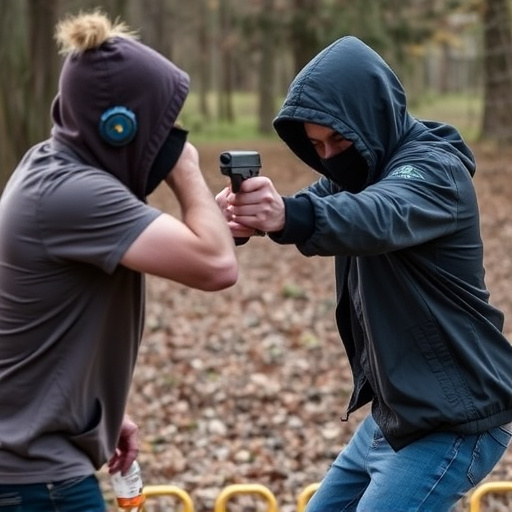
Tactical pepper spray deployment methods are a crucial element of riot control strategies, offering diverse options for crowd management. Handheld aerosol cans provide precision targeting, ballistic launchers offer extended range, and drones equipped with pepper spray enable aerial deployment in hard-to-reach areas. These methods allow law enforcement to adapt their tactics based on situation dynamics, effectively dispersing crowds without causing permanent harm. Strategic deployment of these tools demands meticulous design, rigorous training, and careful consideration of crowd situations, terrain, and environmental factors for safe and effective use.
“In the realm of law enforcement and riot control, tactical pepper spray is an essential tool for maintaining public safety. This article delves into the crucial role it plays during high-intensity situations, exploring various deployment methods for optimal effectiveness. From understanding the spray’s mechanism to designing specialized dispenser units, we uncover innovative tactics. By examining different strategic applications of tactical pepper spray deployment methods, we aim to equip professionals with enhanced capabilities in managing unruly crowds.”
- Understanding Tactical Pepper Spray: Its Role in Riot Control
- Different Deployment Methods for Optimal Effectiveness
- Designing and Using a Riot Control Pepper Spray Dispenser Unit
Understanding Tactical Pepper Spray: Its Role in Riot Control
Tactical pepper spray is a crucial tool in riot control, offering a non-lethal yet effective means to disperse and subdue crowds. Its primary role is to create a temporary but intense irritation, disabling individuals without causing permanent harm. This chemical agent can be deployed in various ways, each serving specific tactical needs during civil unrest or large-scale gatherings.
The deployment methods for tactical pepper spray are diverse, allowing law enforcement agencies to adapt their approach based on the situation’s dynamics. These include handheld aerosol cans, ballistic launchers, and even drone-delivered sprays. Handheld canisters offer precision and direct control, making them ideal for crowd management. Ballistic launchers provide a longer range, useful for maintaining order from a distance. Drones equipped with pepper spray offer a unique advantage, allowing for aerial deployment, which can be particularly effective in hard-to-reach or congested areas.
Different Deployment Methods for Optimal Effectiveness
In the realm of riot control, tactical pepper spray deployment methods play a pivotal role in ensuring optimal effectiveness and safety for both law enforcement officers and civilian crowds. One of the most common methods involves handheld dispensers, allowing operators to target specific individuals or areas with precise accuracy. This direct approach is particularly useful for dispersing aggressive crowds or neutralizing violent subjects.
Additionally, mounted units on vehicles offer a strategic advantage by enabling a broader area coverage. These integrated systems can quickly deploy pepper spray from elevated positions, making them ideal for large-scale events or urban settings where mobility is key. Moreover, automated dispensing mechanisms have emerged as innovative game-changers, providing controlled releases based on triggered sensors, which enhances safety and minimizes off-target effects during high-pressure situations.
Designing and Using a Riot Control Pepper Spray Dispenser Unit
The design and utilization of a riot control pepper spray dispenser unit involve careful consideration of tactical deployment methods for optimal effectiveness. These units are meticulously crafted to deliver precise and controlled amounts of pepper spray, ensuring that law enforcement officers have a non-lethal yet powerful tool during crowd control situations or when confronting rioters. The dispenser’s mechanism typically includes adjustable settings, allowing for varying spray patterns and ranges to suit different tactical needs.
When employing these devices, it’s crucial to adhere to specific procedures. Officers must receive adequate training in pepper spray application techniques, including proper targeting, distance maintenance, and post-deployment decontamination. Tactical pepper spray deployment methods should be carefully planned, considering factors such as crowd dynamics, terrain, and environmental conditions. Effective use of these units requires split-second decision-making skills, making rigorous training sessions indispensable for ensuring both public safety and the well-being of the officers themselves.
Tactical pepper spray, an effective riot control measure, can be deployed through various methods for optimal results. Understanding these deployment techniques is key to designing and utilizing a riot control pepper spray dispenser unit effectively. By integrating the right dispensing technology with strategic application methods, law enforcement agencies can ensure public safety during high-risk situations, making tactical pepper spray a valuable tool in their arsenal.